Покупаете подержанный погрузчик Komatsu WA380? Вот ваш обязательный контрольный список для проверки.
Release time: 2026-02-24
Let’s be real for a second: dropping serious cash on heavy machinery is always a bit nerve-wracking. When you are eyeing a used Komatsu WA380 loader, you are looking at one of the most reliable workhorses in the 3-to-4 cubic yard class.
These machines are legendary for their breakout force and fuel economy. They are an absolute staple in quarries, batch plants, and large earthmoving sites. But just because it rocks the Komatsu badge doesn’t mean you should buy it blind.
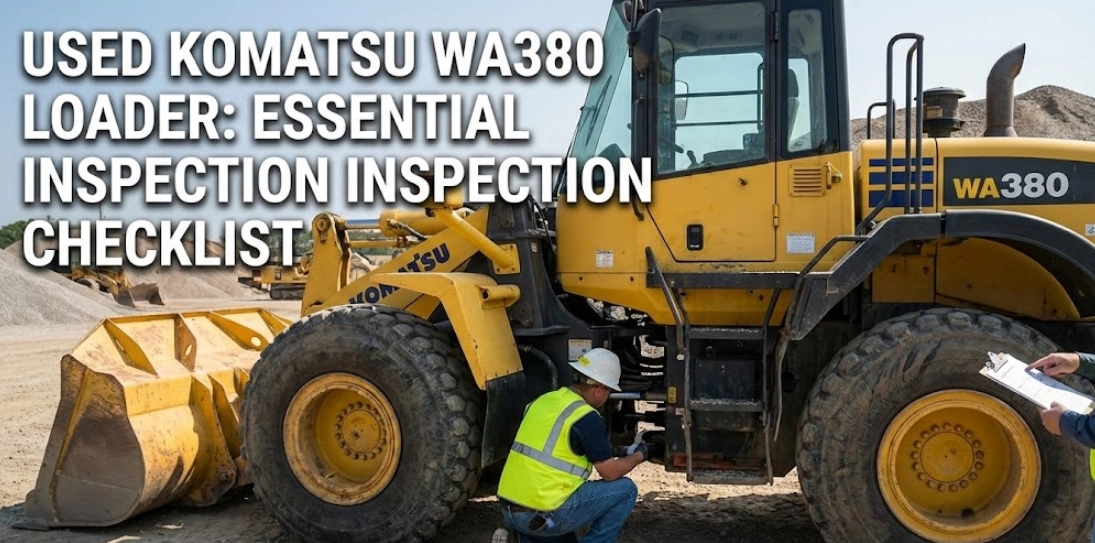
A wheel loader lives an incredibly tough life, constantly ramming into stockpiles and carrying heavy loads over brutal terrain. Before you sign that wire transfer, you need to know exactly what you are getting into. To help you separate a great deal from a total money pit, I’ve put together this essential inspection checklist.
1. Scrutinize the Articulation Joint
The center articulation joint is the literal backbone of any wheel loader. It takes an absolute beating during tight, repetitive loading cycles. When inspecting a used Komatsu WA380 loader, you want to pay laser-close attention to the upper and lower hinge pins.
Have an operator fire up the machine, lock the brakes, and gently turn the steering wheel from side to side. You should be standing safely outside, looking directly at the center joint for any unnatural movement.
If you see the pins popping up and down or notice significant clunking, that’s a major red flag. Excessive play here means the line boring and pin replacement will cost you a small fortune. A tight, well-greased articulation joint tells you the previous owner actually cared about preventative maintenance.
2. Diagnose the Engine and Powertrain
Pop the hood, and let’s talk about power. The WA380 usually runs an incredibly solid Komatsu engine, but you still need to check the absolute basics before making a purchasing decision.
- The Cold Start: Start the engine from a dead cold state if possible. A brief puff of black smoke on startup is normal, but continuous white or blue smoke means you are looking at expensive fuel or oil-burning issues.
- The Blow-by Check: Remove the oil filler cap carefully while the engine is running to check for excessive blow-by. A little vapor is fine, but a chugging train means worn piston rings.
- The Transmission Test: Put the machine in gear under load. The transmission should shift smoothly between forward and reverse without aggressive jerking, hesitation, or strange whining noises.
3. Inspect the Hydraulics and Front Linkage
Move your way to the front business end of the loader. The WA380 utilizes a robust Z-bar linkage designed for maximum bucket breakout force. However, metal only lasts so long against highly abrasive materials.
Check the heavy lift arms for any hairline cracks, stress fractures, or sketchy aftermarket welding jobs. You want to heavily scrutinize the bucket hinge pins and the tilt cylinder linkages. If the bucket looks like it’s sagging or wobbling when raised off the ground, those bushings are likely completely shot.
Don’t ignore the hydraulic system itself. Climb under the machine (safely) and inspect the belly pans. Are they bone dry, or is there a swamp of hydraulic fluid and dirt caked down there? Follow the main hoses from the hydraulic pump, looking for heavily cracked rubber or active drips.
4. Evaluate the Tires and Rims
Loader tires are notoriously expensive, so this step can easily make or break your budget. Check the tread depth on all four corners of the machine. Uneven wear can indicate serious alignment issues or bent axles.
Look closely at the rubber sidewalls for deep cuts, massive chunks missing, or severe dry rot. If the tires need immediate replacing, you need to factor that heavy cost into your final negotiation price right away.
Also, inspect the heavy steel rims for hairline cracks around the lug nuts and the valve stems. A cracked rim is a serious safety hazard and a costly replacement that you definitely don’t want to deal with on day one.
5. Verify Cab Condition and True Hours
Inside the cab, your first job is to verify the operating hours. Does the physical wear on the foot pedals, the steering wheel, and the seat match what the hour meter is telling you?
If the digital meter says 4,000 hours but the seat is completely shredded and the floor mat is worn through to the bare metal, someone might be playing games with the numbers. Trust your gut on this one.
- Test the Controls: Run through every single button and switch in the cab. Make sure the heat, A/C, and windshield wipers actually work.
- Joystick Feel: The hydraulic joystick controls should feel highly responsive, snappy, and smooth, not spongy or delayed.
Final Thoughts Before You Buy
Покупка used Komatsu WA380 loader is a highly profitable investment for your fleet, provided you do your homework and use this checklist to weed out the lemons. Don’t be afraid to walk away if a machine fails multiple points on this list.
Take your time, bring a trusted mechanic if you aren’t perfectly confident, and always ask for the machine’s full service history. A well-maintained WA380 will easily pay for itself in no time.